
You had your home inspected for mold.
Now you’re holding a report filled with photos, measurements, laboratory results, technical language, and recommendations. Maybe you’ve also received a remediation estimate for thousands or even tens of thousands of dollars.
And somehow, you’re supposed to decide:
Does my home actually need all of this work?
For most homeowners, that’s an incredibly difficult question to answer.
You hired an inspector precisely because you needed someone with expertise you don’t have. But the information gathered during that inspection may influence nearly everything that happens next, from which areas are opened up to how large the remediation scope becomes.
That’s why the quality of an inspection matters so much.
On this episode of Never Been Sicker, Michael Rubino sits down with environmental inspector Michael Schrantz for an unusually candid conversation about what happens when inspections miss important clues, when remediation recommendations go further than the evidence supports, and how homeowners can make more informed decisions before work begins.
Because the goal shouldn’t be to recommend the most remediation.
It shouldn’t be to recommend the least, either.
The goal is to understand the building well enough to determine what it actually needs.

Who You’re Listening To: Michael Schrantz
Michael Schrantz is an environmental inspector whose work focuses on investigating indoor environmental concerns and helping clients better understand what may be happening inside their buildings. Over the course of his career, his inspection process has evolved as he has encountered complicated homes, hidden contamination, difficult moisture problems, and situations where conventional testing alone didn’t provide enough information.
In this episode, he dives deep into the inspection and remediation process, including sampling methods, concealed areas, crawl spaces, remediation recommendations, DNA-based testing, cleaning approaches, and the sometimes complicated relationship between inspectors and remediation professionals.
The result is less a conversation about finding mold and more a conversation about how we make good decisions once there’s reason to investigate.
The Most Expensive Remediation Mistake May Happen Before Remediation Starts
It’s easy to think of mold inspection and mold remediation as two completely separate events.
First someone inspects. Then someone remediates.
But the two are deeply connected.
A remediation company needs to know what it is being asked to address. Where is the concern? What materials appear affected? Is there evidence of an underlying moisture problem? Are there areas that warrant further investigation? What does the available testing actually tell us?
If the information guiding the project is incomplete, the remediation scope may be incomplete, too.
But the opposite can also happen. If recommendations extend beyond what the available evidence supports, homeowners may be asked to pay for extensive demolition or remediation that isn’t actually necessary.
That’s one of the most important ideas Michael and Michael explore in this episode:
More remediation isn’t automatically better remediation.
The right scope depends on the individual building and the evidence collected inside it.
A Mold Inspection Should Be an Investigation
Testing can be incredibly useful.
But collecting samples and investigating a building aren’t necessarily the same thing.
A sample tells you something about the specific material, dust, air, or area that was sampled under the conditions present at that time.
A thorough investigation asks a much larger set of questions.
- Why is there reason to suspect a problem in the first place?
- Has the property experienced water damage?
- Are there signs of current or historical moisture intrusion?
- Do building materials show staining, deterioration, or other abnormalities?
- Are there areas where moisture could be entering or accumulating?
- Does the HVAC system warrant evaluation?
- What is happening in the crawl space, attic, basement, or other less-visible parts of the structure?
- Do the building history, physical findings, moisture data, and laboratory results tell a consistent story?
That broader context matters because a laboratory result is information. It isn’t the building itself.
Why Air Sampling Alone May Not Tell the Whole Story
Air sampling is one of the most recognizable tools associated with mold inspections.
And it can provide useful information.
The problem arises when a few air samples are expected to answer every question about an entire building.
Mold and moisture problems can be highly localized. Conditions can vary from one room or building cavity to another, and some contamination may be concealed behind finished materials.
That means an air result that doesn’t show an obvious concern does not necessarily prove that every inaccessible part of the structure is unaffected.
At the same time, an unusual air result doesn’t automatically tell you exactly where a problem is located or how much remediation is warranted.
That’s why Michael Schrantz emphasizes investigation rather than relying on one data point.
Testing should help inform the investigation, not replace it.
What If the Mold Is Behind the Wall?
One of the more fascinating parts of the conversation is Schrantz’s explanation of how his inspection process evolved to include greater investigation of concealed areas.
Sometimes the clues inside a home point somewhere you can’t readily see.
Maybe there’s a history of water intrusion.
Maybe moisture measurements or visible conditions raise questions.
Maybe something about the building assembly suggests that a concealed space warrants further evaluation.
In situations like these, Schrantz discusses tools and techniques that can provide additional information, including wall-cavity sampling.
That doesn’t mean every mold inspection requires opening or sampling every wall in the house.
It means that when evidence suggests a concealed problem may exist, the investigation may need to go beyond the finished surface.
A home can look perfectly normal from the room you’re standing in while something very different is happening on the other side of the drywall.
Don’t Forget the Parts of the House You Rarely See
Crawl spaces are another major part of the conversation.
They’re easy to ignore because homeowners may almost never enter them.
The building doesn’t have that luxury.
Moisture conditions beneath a home can affect building materials and create environments that support microbial growth.
During the episode, Schrantz describes one particularly problematic crawl space as:
“It’s basically like a petri dish underneath your home.”
That’s colorful language, but it makes an important point.
A home needs to be evaluated as a system.
The living room doesn’t exist independently from the crawl space beneath it, the attic above it, or the HVAC system moving air throughout it.
If an inspection focuses only on the easiest rooms to access, important parts of the building story may remain unexplored.
Your Inspection Report Should Help Someone Take Action
Finding a concern is only part of an inspector’s job. The information also needs to be useful.
Imagine receiving a report that essentially says: Mold was found. Remediate.
What exactly is the remediation company supposed to do with that?
- Which areas require attention?
- What evidence supports those recommendations?
- Which materials are involved?
- Are there moisture conditions that need to be corrected?
- Are there areas that require additional investigation once work begins?
- Are the recommendations tied clearly to the inspector’s findings?
A useful assessment should give the homeowner and the professionals involved enough information to understand what was observed, why it matters, and what the recommended next steps are.
Otherwise, ambiguity gets pushed downstream.
And ambiguity during remediation can become expensive.
The Inspector and Remediator Have Different Jobs
This leads to an important relationship Michael and Michael discuss throughout the episode.
Inspectors and remediation professionals need to communicate.
But they also serve different functions.
The inspector investigates the building, documents findings, collects appropriate data, and develops recommendations based on that assessment.
The remediation company then determines how to execute the necessary work appropriately.
When those two sides communicate well, questions can be resolved before someone starts tearing apart a house.
But maintaining clarity between the roles matters, too.
Homeowners benefit from having an assessment that isn’t simply designed to justify the largest possible remediation project.
The objective should be evidence-based decision-making.
You Can Also Be Told to Remediate Too Much
This is one of the most refreshing parts of the episode.
Not every questionable remediation plan is too small.
Some may be too large.
Michael and Schrantz discuss situations in which homeowners received recommendations for extensive work that they questioned based on the available evidence.
And Schrantz offers advice homeowners rarely hear: “Don’t just blindly follow the recommendations that are in the assessment.”
That doesn’t mean ignoring professional advice because you don’t like the price.
It means understanding why something is being recommended.
- If someone tells you that an entire attic needs remediation, what findings support that?
- If extensive demolition is recommended, what evidence points to those materials?
- If two professionals provide dramatically different opinions, can each explain the reasoning behind their scope?
There should be a defensible connection between what was found and what you’re being asked to pay to address.
Bigger Isn’t Better. Smaller Isn’t Better. Appropriate Is Better.
This distinction matters because mold remediation can involve significant money and major disruption to a home.
It would be easy for a remediation company to argue that the safest answer is simply to remove more.
But unnecessary demolition carries its own costs.
Materials need to be removed and replaced. Families may need to relocate temporarily. Projects take longer. Construction costs rise.
On the other hand, trying to minimize a legitimate contamination problem can leave affected materials behind and lead to another round of work later.
Neither extreme serves the homeowner.
The best remediation scope isn’t the biggest or smallest one. It’s the one supported by the building-specific evidence.
Can You Remediate Mold Without Demolition?
Michael and Schrantz also get into one of the most contentious areas of the mold industry: approaches marketed as alternatives to traditional removal.
Fogging, sprays, antimicrobial products, and other treatments are often attractive for an obvious reason.
Nobody wants to tear apart their house if they don’t have to.
But a product and a remediation strategy aren’t automatically the same thing.
If porous building material is significantly contaminated, simply applying something to the environment may not address the affected material itself or correct the moisture condition that allowed the problem to develop.
That doesn’t mean every product used in remediation is inherently useless.
It means homeowners should ask what each product or process is actually intended to accomplish.
- What is being physically removed?
- What is being cleaned?
- What moisture source is being corrected?
- What evidence shows the proposed method is appropriate for the conditions found?
A bottle, machine, or treatment method shouldn’t become a substitute for understanding the problem.
Different Mold Tests Answer Different Questions
Later in the conversation, Michael and Schrantz go deeper into mold testing, including DNA-based methods.
This is another area where homeowners can quickly become overwhelmed.
- Air samples.
- Surface samples.
- Wall-cavity samples.
- Dust testing.
- DNA-based analysis.
Each can provide different information, and none should be treated as a magical test capable of answering every question about every home.
The right question isn’t: What is the best mold test?
It’s: What are we trying to learn?
If you’re trying to understand what may be present in accumulated dust, that’s a different question from investigating a suspicious area inside a wall.
Testing becomes far more useful when the method is chosen because it helps answer a specific question within the larger investigation.
Questions to Ask Before You Spend Thousands on Remediation
You don’t need to become a mold inspector before hiring one.
But you should feel comfortable asking questions about the investigation and the recommendations that come from it.
Before moving forward with a major remediation project, consider asking:
What evidence supports the areas you’re recommending for remediation?
- Did you identify or investigate potential moisture sources?
- Were areas outside the main living space, such as the HVAC system, attic, basement, or crawl space, considered when relevant?
- If concealed contamination is suspected, what evidence points to it and how can it be investigated?
- What does each test performed tell us, and what can’t it tell us?
- Are the remediation recommendations specific enough for a contractor to build an appropriate scope?
- If extensive demolition is recommended, what findings justify it?
A trustworthy professional should be able to explain their reasoning in language you can understand.
You’re not being difficult by asking.
You’re making a major decision about your home.
Final Thoughts
When homeowners think about mold remediation going wrong, it’s easy to picture poor work during the remediation itself.
But sometimes the problem starts earlier.
- The wrong area was identified.
- An important clue was missed.
- A test result was given more weight than it could reasonably carry.
- The recommendations weren’t specific enough.
- Or perhaps the proposed scope was far larger than the evidence justified.
That’s why a good mold inspection isn’t simply about finding the highest mold count or collecting the largest number of samples.
It’s about understanding the building.
- What happened?
- Where did moisture come from?
- What materials or areas appear affected?
- What remains uncertain?
- What additional investigation is warranted?
- And what does the evidence actually justify doing next?
Because homeowners shouldn’t have to choose between doing too little and spending far more than necessary.
They deserve enough information to make the right decision for their home.
Watch the full episode of Never Been Sicker with Michael Rubino and Michael Schrantz for their complete conversation about mold inspections, hidden contamination, sampling methods, remediation recommendations, industry disagreements, and what homeowners should understand before starting a remediation project.

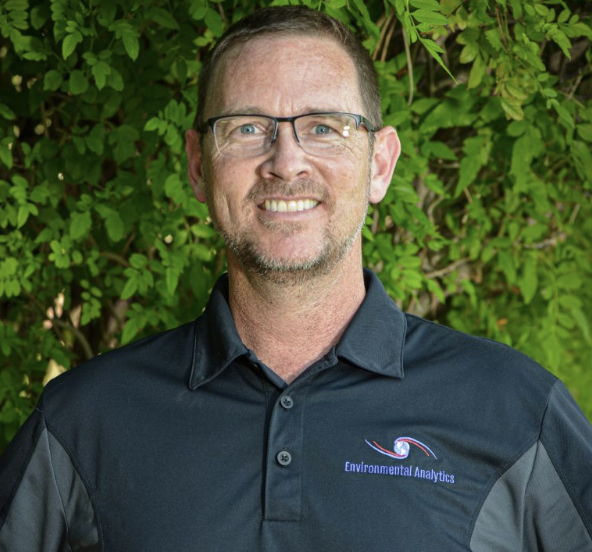
Meet Today’s Guest: Michael Schrantz
What makes Michael Schrantz particularly interesting for this conversation is his willingness to discuss how his own thinking and inspection methods have evolved.
Environmental investigation isn’t always neat.
Buildings are complicated. Moisture moves. Contamination can be hidden. Testing methods have limitations. Professionals can interpret evidence differently.
Rather than pretending there is one universal inspection template that works for every property, Schrantz emphasizes adapting the investigation to the building in front of him.
That philosophy also means being willing to question recommendations, including recommendations for more remediation.
Throughout his conversation with Michael Rubino, the two don’t agree simply for the sake of agreeing. They examine different approaches, industry practices, testing methodologies, products, and real-world situations where professional judgment matters.
And that’s valuable for homeowners.