
For someone who has spent months or years trying to understand why they don’t feel well, finding mold can feel like finally finding the answer.
There it is. The thing you’ve been looking for.
So you investigate the home. You address the source. You work with your healthcare team. You change your diet, take supplements, support your gut, and do everything you can to help your body recover.
But then something frustrating happens.
You still don’t feel like yourself.
Does that mean you got it wrong?
Not necessarily.
In this episode of Never Been Sicker, Michael Rubino sits down with integrative and holistic health practitioner Brianne Quinn to explore why mold recovery isn’t always as simple as identifying one problem, addressing it, and immediately feeling better.
Sometimes exposure is still occurring somewhere you haven’t considered.
Sometimes the body needs more time and individualized support.
And sometimes, according to Brianne, there’s another piece people don’t expect to encounter at the end of a long health journey: learning to feel safe again.
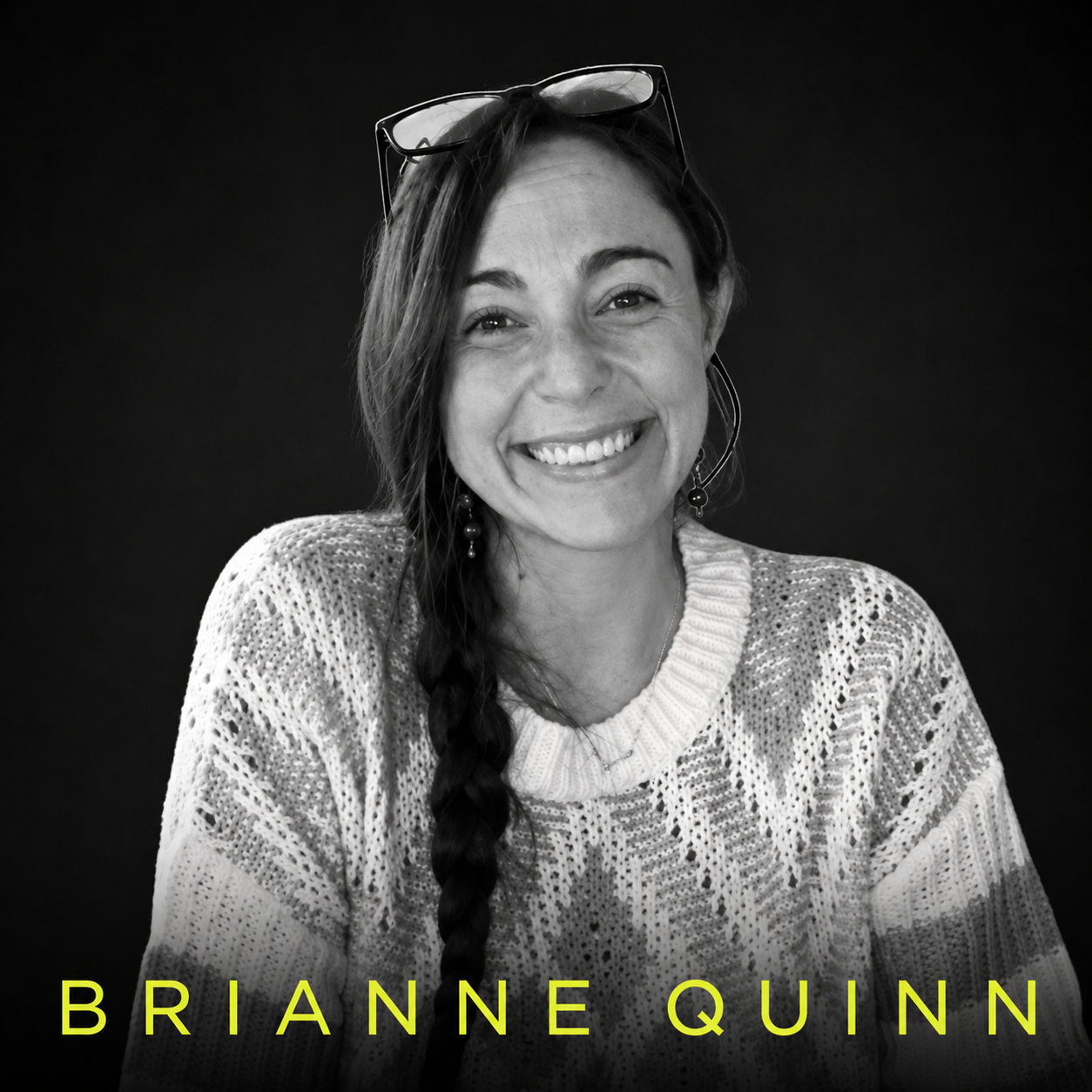
Who You’re Listening To: Brianne Quinn
Brianne Quinn, IHP2, CHHC, is the founder of Ohana Wellness Company and a board-certified Integrative & Holistic Health Practitioner.
After attending nursing school, Brianne ultimately moved toward integrative health, drawing partly from her own experiences navigating chronic illness. For more than a decade, she has worked with clients using a whole-body approach that considers nutrition, lifestyle, environmental factors, gut health, stress, and other potential contributors to wellness.
After operating a clinic in the New Orleans area for six years, Brianne relocated to Kodiak, Alaska, and now works with clients virtually.
First, You Have to Turn Off the Faucet
One of Brianne’s best analogies in the entire conversation involves a bathtub.
Imagine you’re trying to empty a tub while the faucet is still running.
You can scoop out water as quickly as possible. You may even get the water level to drop.
But if you never turn off the faucet, you’re fighting against a constant incoming source.
Brianne uses that analogy to describe what she sees when someone is working extensively on their health while continuing to encounter an unresolved environmental exposure.
“It’s like trying to drain a tub while the faucet is still on.”
Someone may change their diet, work on their gut, take supplements, or follow a treatment plan and initially see progress. But Brianne says some of her clients eventually hit a wall when an ongoing exposure hasn’t been identified or addressed.
And that exposure isn’t necessarily at home.
Throughout the conversation, she talks about investigating the different environments someone regularly occupies, including workplaces, schools, dorms, cars, and other buildings.
Before assuming a health protocol has failed, she wants to know whether the faucet is actually off.
When Testing Says Everything Is Fine
Of course, you can’t address an exposure you don’t know exists.
Brianne shares the story of a teenage client who was experiencing debilitating fatigue and eventually severe hair loss.
The family had already pursued answers, and their home had been evaluated for mold. According to Brianne, initial air testing didn’t identify a significant problem.
A later investigation did.
That brings Michael and Brianne into an important discussion about what environmental testing can and cannot tell us.
Air sampling can be a useful investigative tool. The problem is treating a limited sample as though it represents every condition throughout an entire room or home.
Michael illustrates the limitation with a simple example.
A 10-by-10-foot room with an eight-foot ceiling contains more than 22,000 liters of air. A sample collecting roughly 75 liters evaluates only a small portion of that total volume.
Where a sample is collected, what conditions exist at that moment, and what question the investigator is trying to answer all matter.
That’s why a comprehensive mold investigation shouldn’t rely on one data point alone. Moisture history, visual observations, building conditions, occupant concerns, and appropriate environmental testing can all contribute pieces of the puzzle.
Why Is One Person Sick When Everyone Else Seems Fine?
It’s one of the most frustrating questions surrounding environmental illness.
Two people share a home.
One reports significant symptoms.
The other feels completely fine.
It’s tempting to interpret that difference as evidence that the environment couldn’t possibly be involved.
But people aren’t identical biological systems.
Brianne describes susceptibility through what she calls the rain barrel.
Imagine that every stressor and exposure throughout your life adds a little water to a barrel. Genetics, previous illnesses, environmental exposures, stress, and other factors may all influence how quickly that barrel fills.
Eventually, something causes it to overflow.
The timing and amount needed to reach that point won’t necessarily be identical for two people, even when they’re sharing the same environment.
It’s one reason this conversation repeatedly comes back to individualized care.
The goal isn’t to assume that mold explains every symptom.
It’s to investigate the whole picture.
The Symptoms May Not Look the Way You Expect
Ask someone what mold exposure looks like and they’ll probably think of allergies first.
Sneezing. Runny nose. Itchy eyes. Wheezing.
Those are well-recognized responses to mold exposure for some people, but Brianne says the clients she works with often arrive with much broader and more complicated health histories.
Throughout the episode, she discusses fatigue, cognitive complaints, anxiety, histamine-related symptoms, joint discomfort, digestive concerns, and other symptoms she encounters in her practice.
She even mentions frequent static shocks as a pattern she’s noticed in some clients.
That distinction matters.
An unusual symptom isn’t a mold test.
Static shocks, anxiety, fatigue, brain fog, or any other nonspecific symptom can have many possible explanations. Brianne isn’t suggesting that someone should experience one of these things and conclude that mold is the cause.
Instead, she uses symptoms as clues within a much larger investigation.
That’s a useful distinction for anyone navigating a complicated health problem: patterns can tell you where to look, but they don’t necessarily tell you what you’ll find.
Remediation Isn’t a DIY Demolition Project
Once someone believes they’ve found mold, the instinct can be:
Get it out. Now.
Understandable.
But Michael and Brianne discuss why tearing into contaminated building materials without an appropriate plan can create additional problems.
Disturbing mold growth can release spores, fragments, dust, and other particles from the affected area. Without appropriate containment and engineering controls, those particles may spread beyond the original work area.
That’s particularly concerning if someone begins demolition while an HVAC system is operating or carries contaminated debris through unaffected areas of the home.
Successful remediation also involves more than removing something that visibly has mold on it.
The moisture source needs to be corrected.
The scope of contamination needs to be understood.
Affected materials need to be handled appropriately.
And the surrounding environment needs to be properly cleaned.
Sometimes the fastest-looking solution isn’t the one that gets you to the finish line fastest.
Removing the Source May Not Be the End
This is where Brianne’s episode takes a turn I find particularly interesting.
What happens when you’ve addressed the environmental problem…
but you still don’t feel okay?
Brianne talks about people whose systems have become highly reactive after long periods of chronic illness. In these cases, she says she may focus first on stabilization and foundational support rather than immediately pursuing increasingly aggressive interventions.
Her analogy this time is a burning house.
You don’t start rebuilding while the house is still on fire.
First, you deal with the fire.
For people experiencing complex or persistent symptoms, determining what that means should involve an appropriately qualified healthcare professional. More treatment isn’t automatically better treatment, and Brianne is surprisingly candid about places where she believes even functional medicine can get this wrong.
Sometimes, she says, practitioners test too much.
Sometimes people supplement without understanding what they actually need.
Sometimes the latest wellness trend isn’t appropriate for a person whose body is already under significant stress.
Recovery isn’t a competition to see who can do the most things.
When Your Home Taught You to Watch for Danger
Then comes one of the most human parts of the episode.
Brianne uses the informal phrase “mold PTSD” to describe the hypervigilance she sees in some people after significant experiences with mold and chronic illness.
To be clear, “mold PTSD” isn’t a clinical diagnosis.
But the behavior she’s describing may sound familiar to people who have gone through a frightening environmental health experience.
You walk into a hotel room and check the ceiling.
You visit a friend’s house and notice the baseboards.
You smell something unfamiliar and immediately wonder whether it’s mold.
A water stain isn’t simply a water stain anymore. It’s something that makes your mind race through everything that happened last time.
That response isn’t particularly difficult to understand.
If you’ve spent a long time believing an environment was contributing to your illness, you’ve effectively trained yourself to notice signs of environmental risk.
Awareness can be valuable.
Living in constant fear isn’t.
Brianne believes that for some people, nervous system support becomes an important part of moving forward after the original environmental issue has been addressed.
The Hardest Thing Brianne Had to Heal
Near the end of the conversation, Michael asks Brianne a personal question.
After everything she has experienced with chronic illness, what was the hardest thing for her to heal?
Her answer isn’t mold.
It isn’t Lyme.
It isn’t her gut.
“My nervous system.”
That answer puts much of the previous hour into perspective.
Brianne describes reaching a point where she felt she was doing the right things physically but still wasn’t progressing the way she expected.
For her, addressing emotional health, chronic stress, and nervous system regulation became another part of recovery.
Her experience shouldn’t be taken as a universal prescription. Everyone’s health situation is different, and persistent symptoms deserve appropriate medical evaluation.
But it does illustrate something important about complex illness:
Finding one contributor doesn’t necessarily mean you’ve found every contributor.
What Happens After the Mold Is Gone?
Finding and correcting an environmental problem can be an enormous step forward.
But it doesn’t necessarily erase everything that happened before it.
The body may need time.
Other health factors may still need investigation.
And after a long experience with chronic illness, a person may need to rebuild something harder to measure: their sense of safety in their own environment.
That’s what makes Brianne’s bathtub analogy so useful.
If the faucet is still running, turn it off.
If the tub is still full, give it time to drain.
And once it’s empty, don’t spend the rest of your life staring at the faucet waiting for it to turn itself back on.
Recovery isn’t always one problem with one finish line.
Sometimes it’s learning which problem you’re actually trying to solve next.

Meet Today’s Guest: Brianne Quinn
What makes Brianne’s perspective particularly interesting is that she understands the frustration of complex illness from both sides of the practitioner-client relationship.
Her own search for answers helped shape the way she now works with others, and she doesn’t describe recovery as a neat sequence where everyone takes the same tests, follows the same protocol, and reaches the same result.
Instead, much of her philosophy comes down to asking what matters for this particular person, at this particular point in their recovery.

Sometimes that means investigating an environment. Sometimes it means supporting the body. Sometimes it means slowing down rather than adding another intervention.
And, as Brianne discovered in her own experience, sometimes progress means addressing the stress and hypervigilance that can remain after a long period of feeling unwell.
That complexity is precisely what makes this conversation worth having.
Connect with Brianne: