

Your child suddenly isn’t acting like themselves.
Maybe they’re having emotional outbursts that seem to come out of nowhere. They’re anxious when they never used to be. They can’t sleep. They’re struggling to focus. They’re complaining about headaches or stomach problems. Or they simply seem like a different kid than they were a few months ago.
Naturally, the behavior gets our attention first.
But what if the behavior isn’t where the investigation should end?
On this episode of Never Been Sicker, Michael Rubino sits down with pediatric practitioner Dr. Somer DelSignore to explore what she believes some children with complex chronic health concerns need most: someone willing to step back and look at the entire picture.
Because sometimes the question isn’t simply: How do we stop this symptom?
It’s: Why did it appear in the first place?
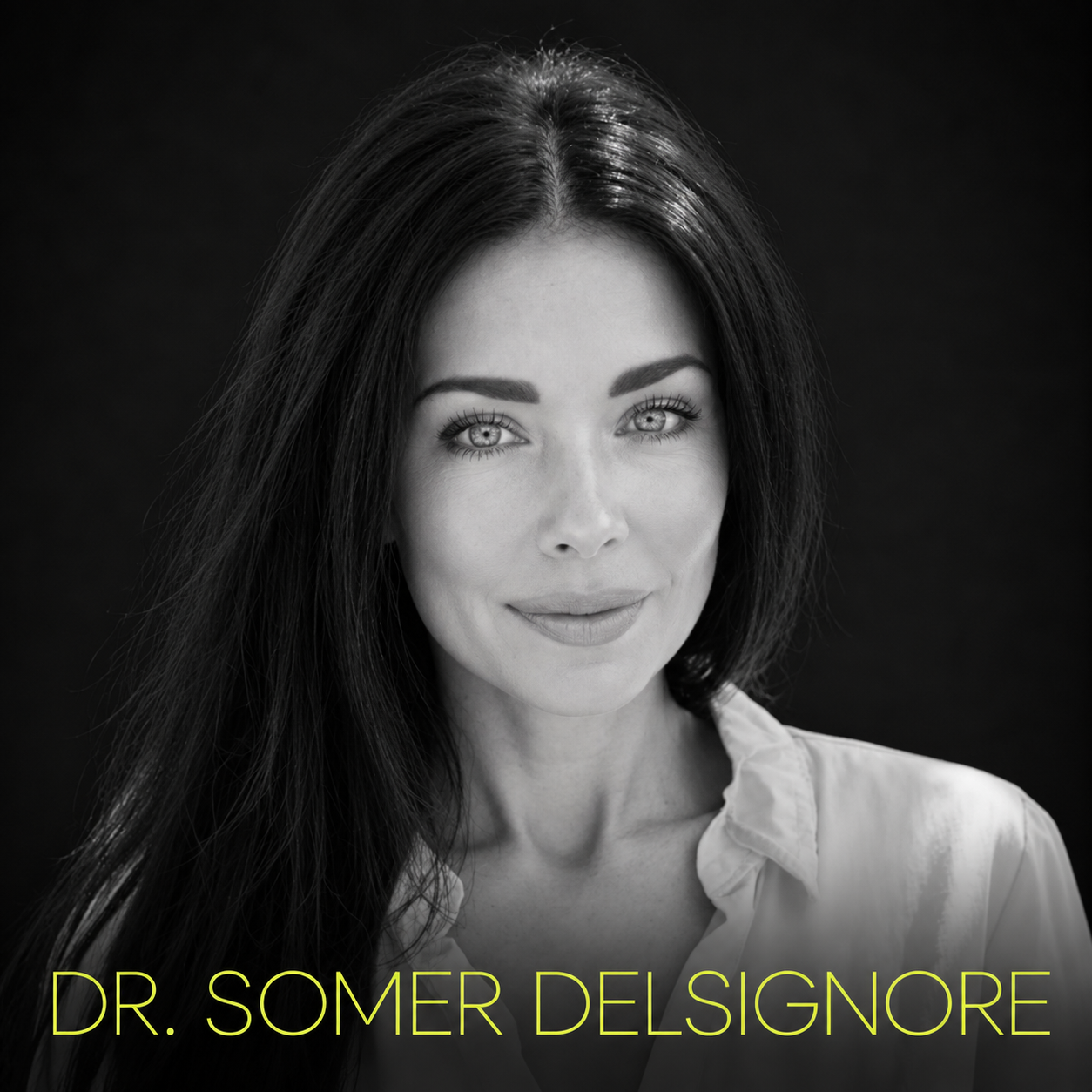
Who You’re Listening To: Dr. Somer DelSignore
Dr. Somer DelSignore, DNP, BC-PNP, FMAPS, ILADS, is a board-certified pediatric provider with more than 20 years of clinical experience and the founder of Hudson Valley Integrative Health in Beacon, New York.
Her work focuses on children and adults navigating complex, multi-system health concerns, particularly cases where the pieces don’t fit neatly within one specialty.
After years of seeing children with overlapping behavioral, neurological, digestive, immune, infectious, and environmental concerns, Somer developed the R.E.S.E.T. framework, an approach designed to evaluate multiple systems and potential contributors together rather than viewing each symptom in isolation.
When the Pieces Don’t Fit
Somer’s approach began changing roughly 15 years ago.
She was working in primary care pediatrics when she encountered two young siblings experiencing a complicated collection of symptoms: behavioral swings, ADHD-type concerns, sleep problems, digestive issues, and episodes of rage.
There appeared to be an infection involved, so Somer treated it.
But the bigger picture didn’t resolve.
That prompted a different kind of investigation.
What else was happening in their bodies? Were there other infections to consider? What was happening in the gut? Were environmental factors relevant? Why were these particular children responding the way they were?
Those questions eventually changed the way Somer approached complicated pediatric cases.
Instead of separating every symptom into its own box, she began looking for the connections between them.
What If Behavior Is Communication?
One of the most important moments in the episode comes when Michael asks Somer what parents should know if their child’s behavior suddenly changes.
Her response:
“I think that usually the behavior is a communication that there’s something else going on with the body.”
That doesn’t mean anxiety, rage, difficulty concentrating, OCD-type behaviors, or intrusive thoughts automatically point to a particular infection, exposure, or medical condition.
It means a significant or sudden change can sometimes warrant a broader conversation.
Somer says that when symptoms appear abruptly, she considers potential physiological contributors alongside behavioral and psychological ones. Depending on the individual child, her investigation may include infections, immune function, gut health, inflammation, environmental exposures, and the nervous system.
The goal isn’t to assign every behavior a hidden medical cause.
It’s to avoid assuming we already know the explanation before we’ve looked at the whole child.
The R.E.S.E.T. Framework
To organize that bigger-picture approach, Somer developed a framework she calls R.E.S.E.T.
R: Reduce Inflammation
Inflammation can have many potential contributors, so Somer looks at the broader biological picture rather than treating it as an isolated problem.
E: Eliminate Toxins
This includes considering potential environmental exposures such as mold-related toxins, VOCs, plastics, particulate matter, and other factors when clinically relevant.
S: Support Gut Health
The gut doesn’t operate in isolation. It interacts with immune function and communicates with the brain, making it another area Somer considers in children with complex symptoms.
E: Eradicate Infections
Depending on the child’s history and presentation, Somer may investigate infections including strep, mycoplasma, viruses, and tick-borne illnesses.
T: Transform Health
Once immediate concerns and contributing factors have been addressed, the focus shifts toward supporting the child’s overall health and resilience over time.
Somer compares the process to turning a cruise ship.
When a child has been struggling for a long time, families understandably want the one test, treatment, or answer that will turn everything around.
But complex cases often don’t work that way.
As Somer says later in the episode:
“Healing is never linear.”
What About the Child’s Environment?
One piece Somer believes deserves more attention in pediatric care is the environment surrounding the child.
And that doesn’t only mean home.
It can mean school, too.
Children can spend six or more hours each weekday inside a school building, in addition to the enormous amount of time they spend at home.
Yet when a child develops persistent or unexplained symptoms, the buildings they occupy aren’t always part of the initial conversation.
In Somer’s own clinical population of chronically ill children, she estimates that she finds a mold or mycotoxin burden in roughly 80% of the patients she sees.
That number is important to put into context. It is Somer’s estimate based on the highly selected group of chronically ill children who reach her practice. It is not a statistic suggesting 80% of children generally have mold-related illness.
Still, her clinical experience has made environmental history an important part of how she evaluates complex cases.
And she believes we need to think beyond the classic picture of mold as solely an allergy or respiratory concern.
Depending on the patient, she considers environmental factors alongside sleep disturbances, fatigue, digestive problems, headaches, brain fog, emotional dysregulation, and other symptoms.
Again, the point isn’t that mold explains every symptom.
It’s that the environment can be another piece worth investigating when the clinical picture calls for it.
Home Isn’t the Only Place to Look
This is an especially important distinction for children.
If a family investigates their home and doesn’t find an obvious problem, it can be tempting to cross “environment” off the list entirely.
But think about everywhere a child spends significant time.
- Home.
- School.
- Daycare.
- A relative’s house.
- Sports facilities.
- Other frequently occupied buildings.
Environmental health is about exposure, not simply an address.
That means a thorough history may need to consider where symptoms happen, when they improve or worsen, and where the child spends their time.
Those patterns don’t diagnose the cause, but they can help determine what questions are worth asking next.
Mold, Lyme, and the Problem With One Explanation
Michael and Somer also discuss the overlap she sees among mold concerns, Lyme and other tick-borne illnesses, gut dysfunction, immune dysregulation, and other factors.
This is where nuance matters.
Finding one potential contributor doesn’t automatically mean you’ve explained everything.
A child may have multiple things happening at once. And Somer argues that simply attacking one suspected problem as aggressively as possible can sometimes be the wrong approach, particularly with children who are already significantly unwell.
She specifically cautions against moving too quickly with detoxification protocols.
Her approach is to consider the child’s current health, foundational support, and ability to tolerate interventions before becoming more aggressive.
In other words, more treatment isn’t automatically better treatment.
The 12-Year-Old Who Arrived on a Stretcher
Later in the episode, Michael asks Somer about the most remarkable recovery she has witnessed.
She tells him about a 12-year-old girl who arrived at her office on a stretcher.
According to Somer, the child was experiencing chronic seizures, had very little muscle tone, couldn’t eat or speak independently, and required a feeding tube.
Her parents told Somer: “She’s dying. We don’t know what to do.”
Somer says the girl had previously experienced symptoms including muscle weakness, cognitive changes, and mood-related concerns, some of which the family had been told were behavioral or that the child was “making it up.”
Somer describes subsequently identifying multiple potential health concerns, including tick-borne infections, heavy metals, mold-related toxins, and autoimmune encephalopathy.
What followed, according to Somer, was an extensive treatment process lasting roughly two years.
Today, Somer says the patient is 17, walking, talking, attending school, and socially engaged.
It’s an extraordinary individual patient story, not evidence that another child with similar symptoms has the same underlying conditions or would experience the same outcome from a similar treatment approach.
But it illustrates the philosophy at the center of Somer’s work:
When the explanation doesn’t fit what is happening to the patient, keep investigating.
Stop Normalizing What Deserves a Question
Throughout the episode, Michael and Somer return to another problem: how easily symptoms can become normalized.
- A teenager is exhausted? Teenagers stay up late.
- A child can’t focus? Maybe that’s simply how they are.
- They’re anxious? Maybe that’s their personality.
- They’re having digestive problems? Lots of kids do.
Sometimes the simplest explanation really is the right one.
But common and unexplained aren’t the same thing.
If something changes dramatically, persists, worsens, or doesn’t respond as expected, there may be value in asking whether something else deserves consideration.
Not because every symptom is evidence of a hidden disease.
Because symptoms are information.
“Symptoms Are Not the Problem”
Near the end of their conversation, Michael asks Somer what she would tell a parent who has repeatedly heard that everything is normal but knows something has changed in their child.
Her answer captures the heart of the episode:
“Symptoms are not the problem. It’s the body communicating.”
There’s an important distinction here.
Listening to symptoms doesn’t mean assuming the worst. It doesn’t mean deciding a behavioral change must be mold, an infection, inflammation, or another medical problem.
It means remaining curious enough to ask why.
Because when a child suddenly stops acting like themselves, sometimes the most useful question isn’t:
How do we make this behavior stop?
It’s: What is this change trying to tell us?
Listen to the full episode of Never Been Sicker with Michael Rubino and Dr. Somer DelSignore for their complete conversation on pediatric chronic illness, environmental exposures, mold, Lyme, gut health, neuroinflammation, the R.E.S.E.T. framework, and what it means to look at the whole child.

Meet Today’s Guest: Dr. Somer DelSignore
Dr. Somer DelSignore has spent more than two decades working in pediatric healthcare, but the children who didn’t fit neatly into conventional diagnostic boxes ultimately changed the direction of her career.
Her training includes work with Dr. Richard Horowitz and Dr. Kenneth Bock, and she has combined that experience with her own integrative approach to develop the R.E.S.E.T. framework for complex, multi-system illness.
Today, through Hudson Valley Integrative Health, she works with children and adults, including many families who have already moved through multiple parts of the healthcare system searching for answers.
What makes her perspective particularly interesting for this conversation is her insistence on looking across systems.

Rather than viewing a behavioral concern, digestive symptom, infection, environmental exposure, or neurological complaint as automatically unrelated, she asks how those pieces might interact in the individual patient.
That doesn’t guarantee one neat explanation.
Often, it means accepting that there may be more than one piece to understand.